18 Sep
air cooling

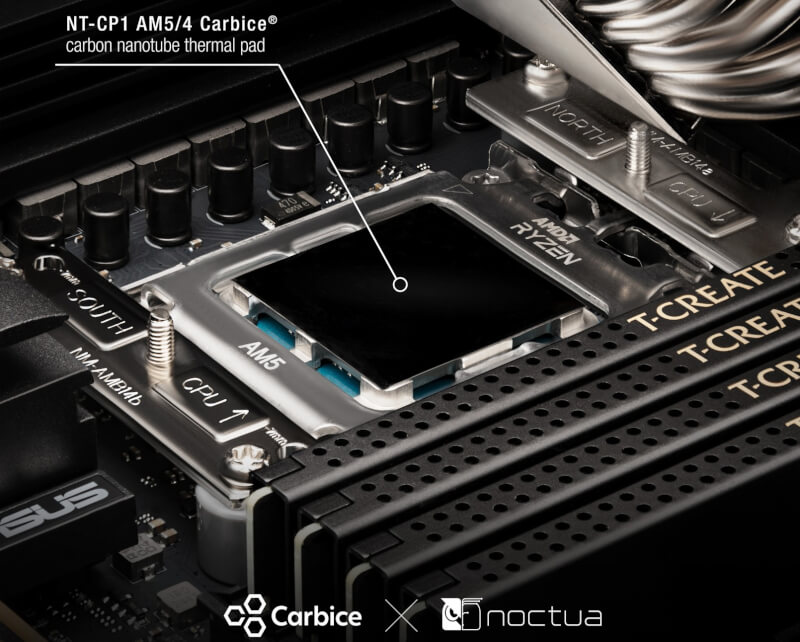
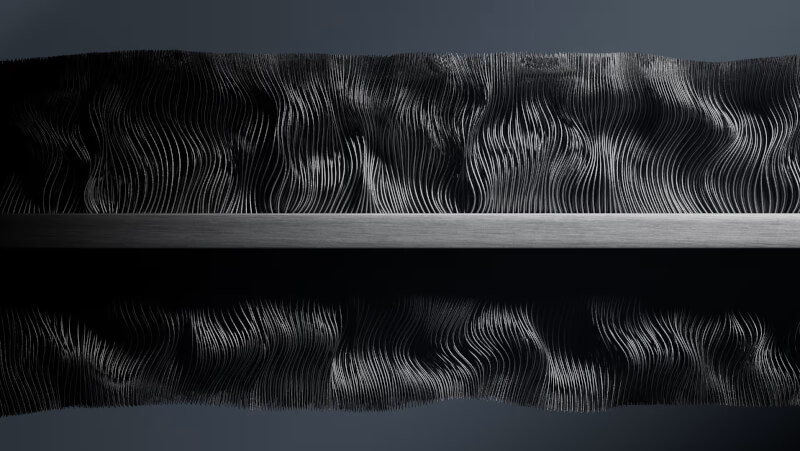
While traditional thermal paste and many common cooling pads dry out, crack or lose performance over time (so-called pump-out), the opposite is true with Carbice pads. Due to the mechanical structure of the carbon nanotubes, the pad adapts to the microstructure of the processor surface as it heats up and cools down. This means that heat conduction is actually improved over hundreds and thousands of heating cycles.
Roland Mossig, CEO of Noctua, sees great opportunities in the technology:
“Carbice’s unique, innovative TIM technology has already proven to be a game-changer in applications that require ultimate reliability, such as satellites, aerospace or critical infrastructure... We are confident that the superior long-term performance, ease of use and reliability of Carbice pads will be equally attractive to PC enthusiasts.”
Many existing graphite or carbon-based pads on the market can be brittle, slippery and conductive (which creates a risk of short circuits). Carbice has solved this by placing a core of aluminum between the layers of carbon nanotubes. The entire surface is also protected by a nanoscale polymer coating. This makes the pad robust, slightly adhesive during installation so that it does not slip, and easy to remove again without a mess.
Baratunde Cola, CEO and founder of Carbice, adds:
"PC builders are asking tough questions and keeping a close eye on what they use in their systems, and this technology will set the bar for what they expect from their thermal interface."
The first product in the portfolio will be the NT-CP1 AM5/4 , a cooling pad tailored and precisely sized for AMD's AM4 and AM5 processors. It is ideal for users who want maximum cooling for years without ever having to think about changing thermal paste.
Noctua will showcase the new NT-CP1 AM5/4 at the Computex trade show in Taipei (June 2-5, 2026), and the product is expected to be available in September 2026.